A quick glance at the horseshoe will show the crabs two compound lateral eyes unusual because no other living chelicerate possesses compound eyes. The horseshoe crab has been on earth for 350 million years.
 96 Best Horseshoe Crab Images Horseshoe Crab Blue Bloods
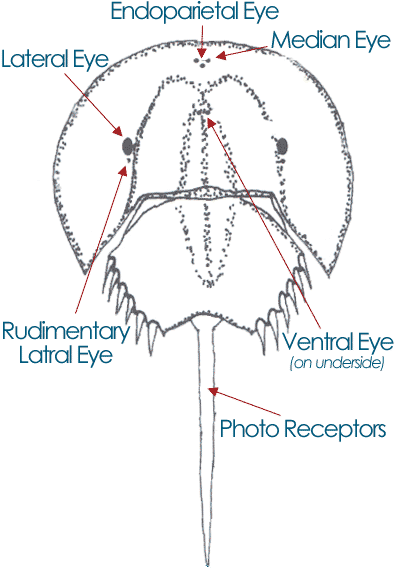
Horseshoe crabs have a total of 10 eyes used for finding mates and sensing light.

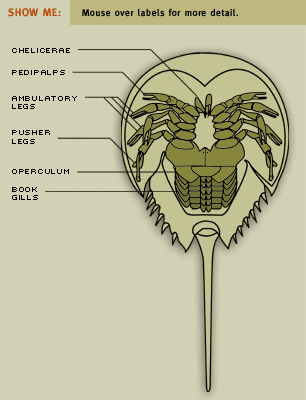
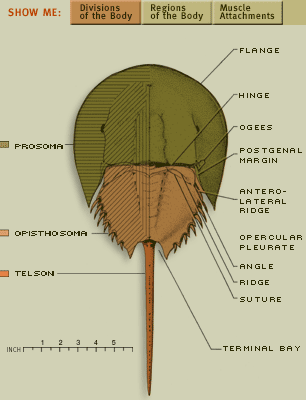
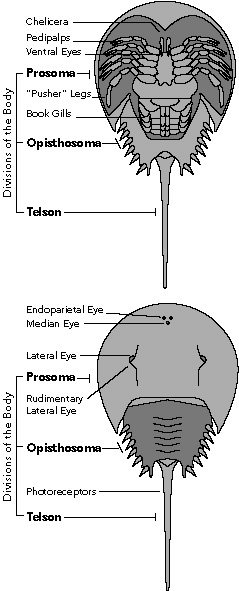
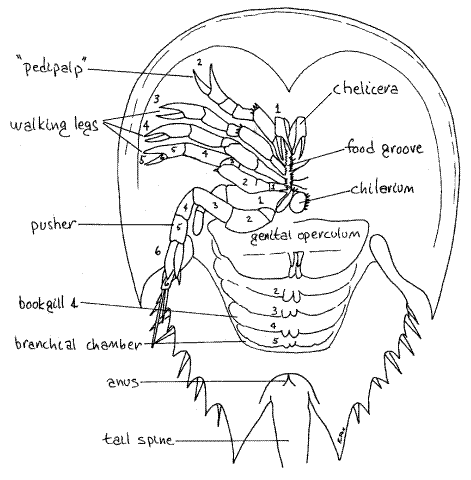
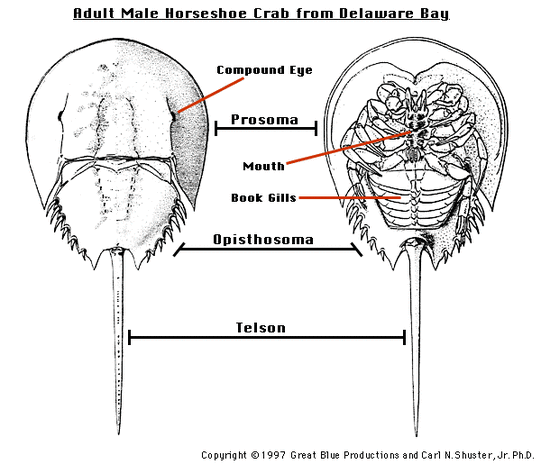
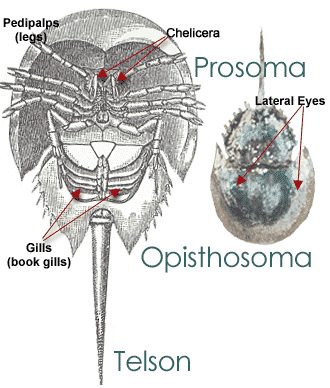
Horseshoe crab anatomy. You can also remember them as the cephalothorax which is a fused head and thorax region the abdomen and the tail respectively. The horseshoe uses the first pair the chelicera for placing food in its mouth. Externally horseshoe crabs can be divided into three sections.
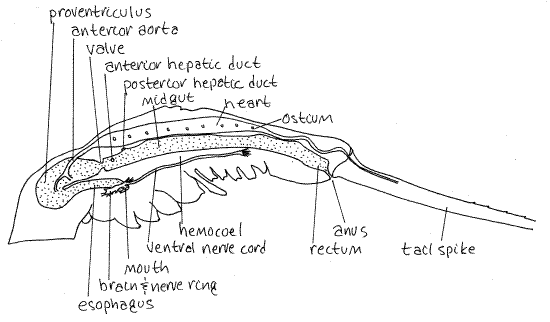
For ecologists the horseshoe is an important creature a vastly adaptable generalist that predates most species on the planet with a lifecyle that is interlocked with other animals. There are three divisions to the body of the horseshoe crab. These are sometimes referred to as the cephalothorax the abdomen and the tail.
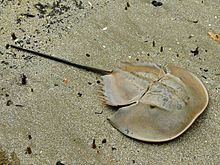
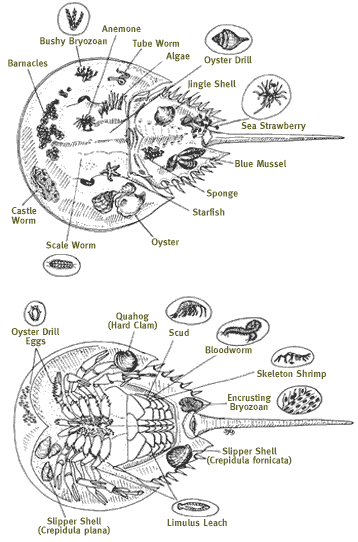
However they can also feed on algae. The horseshoe crab for many the horseshoe crab is a childhood acquaintance first introduced by a fierce looking shell on a sandy beach. Despite their name horseshoe crabs are more closely related to spiders ticks and scorpions than to crabs.
American horseshoe crab telson. The prosoma the front most section the opisthosoma the mid region and the telson that sword like tail. These are used primarily for finding mates but the horseshoe has many more light sensing organs.
A look at the underside of the horseshoe reveals six paired appendages. The horseshoe crab uses its telson to steer and right itself if it becomes inverted in. Horseshoe crabs are generally predators of different species of annelids molluscs as well as of other groups of benthic invertebrates.
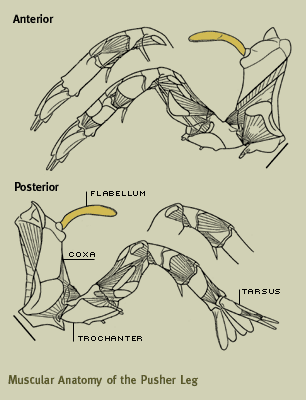
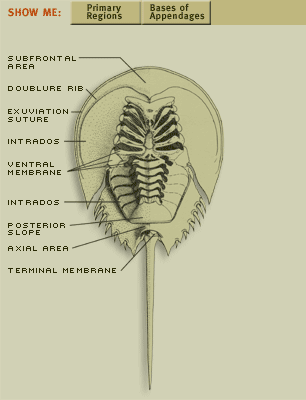
In the adult male the tarsus of these legs are modified as a grasping appendage allowing males to clasp the female during spawning. A horseshoe crab absorbs oxygen from the water using gills that are divided into. The entire body of the horseshoe crab is protected by a hard carapace.
The prosoma the opisthosoma and the telson. It has two compound lateral eyes each composed of about 1000 ommatidia plus a pair of median eyes that are able to detect both visible light and ultraviolet light a single endoparietal eye and a pair of rudimentary lateral eyes on the top. These are the first ambulatory legs.
These are sometimes referred to as the cephalothorax the abdomen and the tail. The atlantic horseshoe crab limulus polyphemus also known as the american horseshoe crab is a species of marine and brackish chelicerate arthropod. The next pair of appendages are the pedipalps.
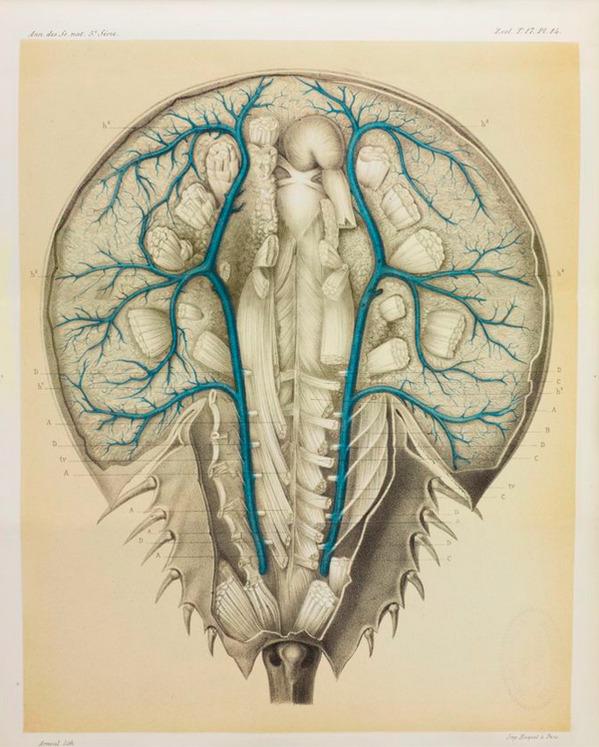
An ancient and complex anatomy hides within its domed shell.
 Anatomy

Horseshoe Crab Anatomy Taxonomy Study Com
 Horseshoe Crab Labeling Page Horseshoe Crab

 Mangrove Horseshoe Crab Wikipedia
 Horseshoe Crab Monitoring Save Coastal Wildlife
 Baby Blue Blood Drive Radiolab Wnyc Studios


 Natural History Spawning Behavior
 Horseshoe Crab Species All You Need Is Biology
 Horseshoe Crab
 Horseshoe Crab Reproduction Life Cycle Study Com
 Horseshoe Crab Anatomy Carol Vinzant Flickr

 Crash A Tale Of Two Species Horseshoe Crab Anatomy
Comparison Of The Anatomy Of A Modern Horseshoe Crab A
 Ct Scans Reveal New Muscles In Horseshoe Crabs The
 By Biodivlibrary Horseshoe Crab Anatomy Fauna
 Anatomy
 Anatomy
 Horseshoe Crab Anatomy Ventral View Diagram Quizlet
 Horseshoe Crab Mouth Anatomy
 Horseshoe Crab Anatomy Taxonomy Study Com
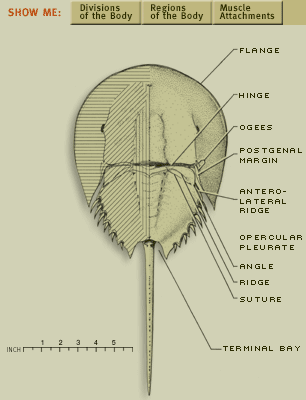 Anatomy
 Diagram Showing The Anatomy Of The Horseshoe Crab Top Side
 Horseshoe Crab Anatomy


Posting Komentar
Posting Komentar